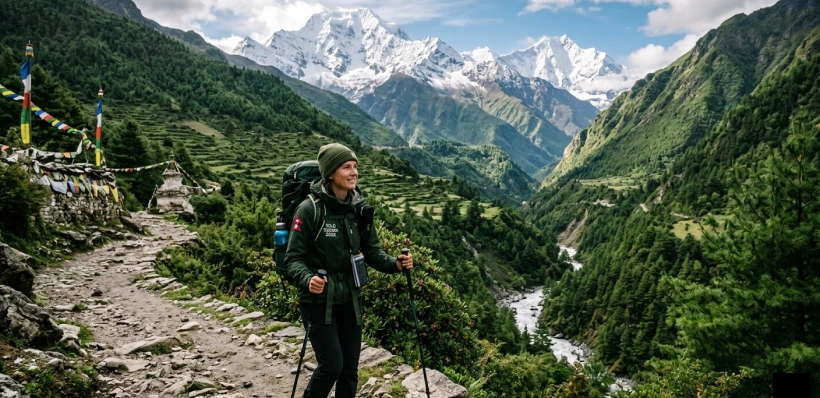
Nepal has always drawn solo adventurers from around the world. The trail to Everest Base Camp, the wide loop of the Annapurna Circuit, and the quiet forests of Langtang have been walked by hundreds of thousands of independent trekkers over the decades. But 2026 is different. The rules have been updated, and if you are traveller who is planning a solo trek in Nepal 2026, then you’ll need to know the list of factors to consider before tying laces on your trekking boots.
Is Solo Trekking in Nepal Still Allowed in 2026?
This is the question every independent traveller asks first. The quick answer to the question is that solo trekking in Nepal is still possible. However, its not allowed in the way it used to be in the past. From April 1, 2023, the Government of Nepal has mandatorily required all foreign trekkers to hire a licensed guide from a registered travelling agency. It is especially true when entering national parks and conservation areas which are part of the hiking trail. The rule is now fully enforced across all major trekking routes in 2026 like Upper Mustang, Manaslu Base camp, Tsum Valley and more.
The good news is that hiring a guide does not mean joining a large group. You can still trek privately with just one guide beside you. It means the same mountain silence, the same personal pace, and the same freedom to stop when the mountain view demands it. The rule changes one thing only, you cannot enter regulated trail zones without a certified professional beside you.
The Mandatory Guide Rule for Nepal Trekking 2026
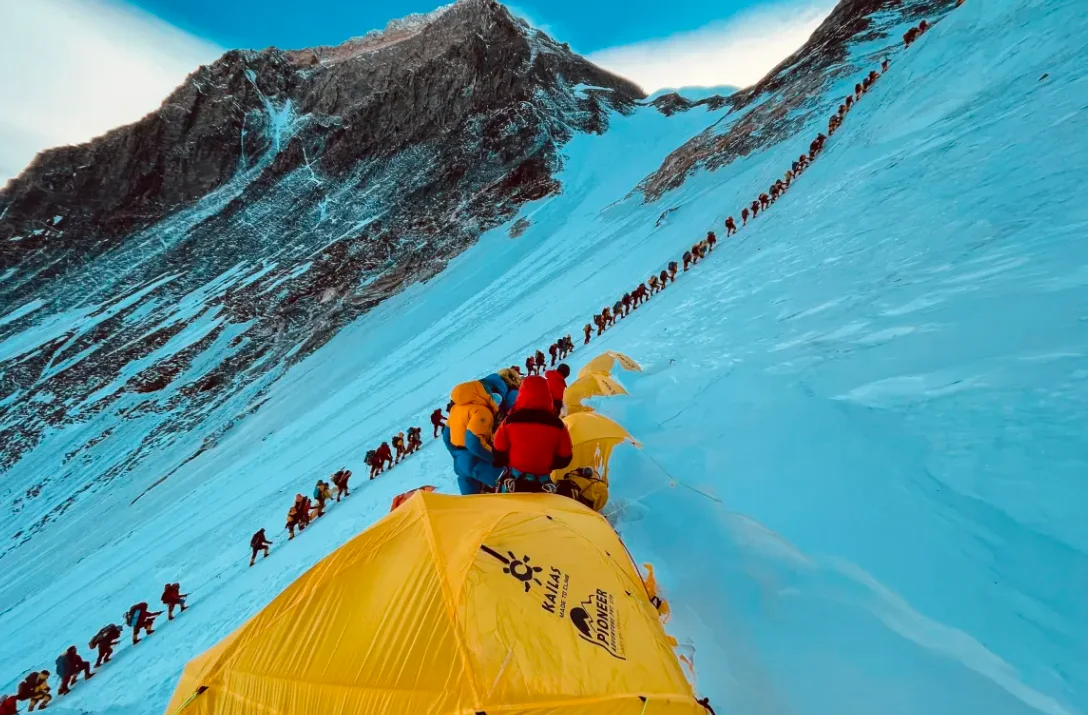
The mandatory guide rule for Nepal trekking 2026 came after a decade of rising safety incidents on Himalayan trails. Between 2015 and 2025, search and rescue operations involving solo trekkers increased by nearly 40%. The Nepal Tourism Board (NTB) and the Trekking Agencies Association of Nepal (TAAN) responded by requiring all foreign trekkers on major routes to be accompanied by a licensed professional at all times.
The rule applies to every major trekking region that falls within a national park or conservation area. This covers the Everest region, the Annapurna Circuit, Langtang Valley, Manaslu Circuit, and all restricted zones including Upper Mustang and Dolpo. Short day hikes near Kathmandu and walks in the Kathmandu Valley do not require a guide.
Trying to bypass the rule has real consequences. Trekkers caught without a licensed guide on regulated routes face immediate removal from the trail, monetary fines, or blacklisting from future Nepal trekking permits. It is simply not worth the risk.
Nepal Trekking Permits You Need in 2026
The Nepal trekking permit system has been updated for 2026 and is now fully digital. You no longer need to visit a government office in person. Your registered trekking agency handles all paperwork on your behalf, and every permit includes a QR code tied to your guide's licence and your insurance details.
Here is what every foreign trekker needs before setting off on a guided solo trek in Nepal:
- TIMS Card (Blue): The old Green TIMS card for independent solo trekkers no longer exists. In 2026, only the Blue TIMS (Guided or Group) is issued. It costs around the range of USD 15 to 17 per person.
- National Park Entry Permit: It’s required for the Everest region (Sagarmatha National Park) and costs approximately USD 25 per person.
- Annapurna Conservation Area Permit (ACAP): It’s needed for the Annapurna Circuit, Annapurna Base Camp, and Ghorepani Poon Hill treks and is priced approximately USD 25 per person.
- Restricted Area Permit (RAP): It’s essential for trekking trails like Upper Mustang, Upper Dolpo, Manaslu Conservation area, and similar zones. A minimum of two foreign travellers are required for travel in these restricted area permits zones.
- Travel Insurance: You cannot obtain a permit in 2026 without proof of insurance covering helicopter rescue and medical evacuation up to 6,000 metres.
Best Treks for Solo Travellers in Nepal 2026
Not all treks are equal when it comes to the solo mindset. Some routes offer more trail privacy, quieter teahouses, and landscapes that reward a slower pace. These are the most popular options for solo travellers in Nepal this season.
-
Everest Base Camp Trek (14 to 16 days): The classic Himalayan journey with well-serviced teahouse trails, excellent guide infrastructure, and views that justify every steep step.
-
Annapurna Circuit Trek (12 to 18 days): A diverse route which combines high mountain passes, subtropical forests, and traditional Gurung villages.
-
Ghorepani Poon Hill Trek (4 to 5 days): Short, scenic, and ideal for first-time solo trekkers offering an alpenglow sunrise view over the Annapurna range from Poon Hill.
-
Langtang Valley Trek (7 to 10 days): A quaint and calm option to the Annapurna and Everest regions, with rich Tamang culture and straight trails.
Solo Trekking Safety Tips for Nepal
Safety on the trail is directly related to preparation and awareness. Whether you are an experienced hiker or heading into the Himalayas for the first time, these solo trekking safety tips for Nepal will keep you on the right side of the mountain.
-
Acclimatise properly: AMS or altitude sickness, is top cause for trekking emergencies in Nepal. Make sure you do not ascend more than 300 to 500 metres per day in elevation above 3,000 meters. Take at least one rest day for acclimatisation after every three to four days.
-
Get a Nepali SIM card: NTC and Ncell are the two main providers. The NTC national carrier of Nepal commonly offers better range coverage in high altitude remote treks.
-
Download offline maps: Apps like Maps.me or Mapy.cz work without a data connection and are essential on the quieter stretches of trail where network coverage drops.
-
Carry enough cash: Tea houses along most routes do not accept cards. Always carry enough Nepali rupees to cover accommodation, meals, and emergencies for at least three days ahead.
-
Register with your embassy: Before leaving Kathmandu, let your country's embassy know your planned route and expected return date. It takes five minutes and matters in an emergency.
-
Trust your licensed guide: Your guide is trained in altitude sickness recognition, emergency first aid, and helicopter evacuation coordination. When conditions shift in the mountains, their judgement is your best resource.
Solo trekking in Nepal in 2026 is still one of the most rewarding adventures on this planet. The rules simply ask you to take a trained professional with you, and that professional may well save your trip or your life in a moment you did not see coming. The mountains have not changed. The standard of care around them has. Avoid the hassle and choose expert guides at Mountain Delights for your next private solo trekking in Nepal for 2026 season.




.webp)